
What Your Younger Self Can Teach You About Leadership
Somewhere along the way, many of us lost a voice we once trusted completely — the one that did not hesitate, did not overthink, did not question whether we were qualified or ready.
There is a photo of me as a toddler, standing in my walker, opening the fridge and going straight for the Heinz ketchup. 🍼🍅

When I look at her now, I can almost hear what she would say:
She did not hesitate.
She did not overthink.
She did not question whether she was allowed, qualified, or ready.
She trusted her instinct.
Somewhere along the way, many of us lose that voice.
When self-criticism replaces wisdom
In leadership, self-criticism is often mistaken for discipline. We tell ourselves it keeps us sharp, accountable, and high-performing. And for a while, it may seem to work.
But over time, that inner critic becomes costly.
I see it every day with senior leaders:
What I see every day
- Second-guessing decisions they are more than capable of making.
- Pushing harder instead of listening deeper.
- Holding themselves to standards they would never impose on others.
- Confusing pressure with excellence.
Self-empathy — not indulgence
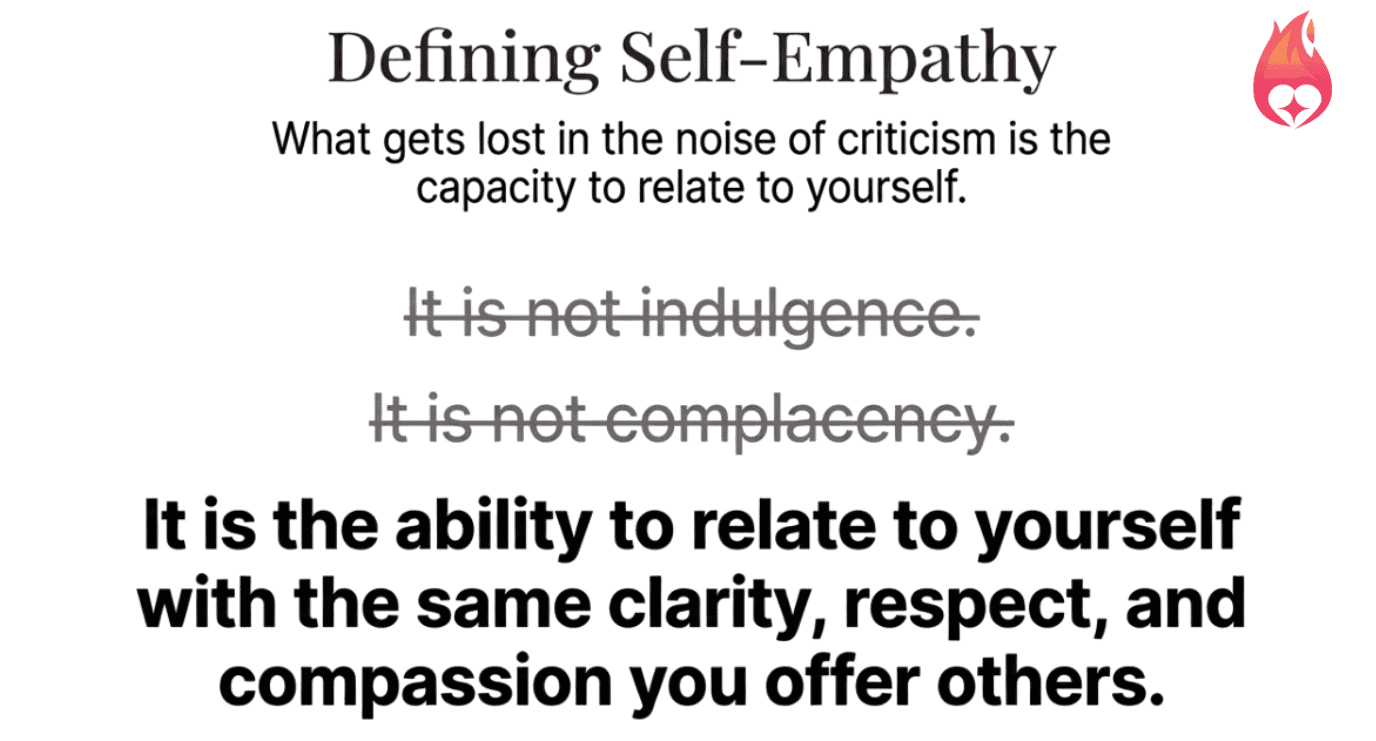
- Not indulgence.
- Not complacency.
- The ability to relate to yourself with the same clarity, respect, and compassion you offer others.
What often gets lost is something far more powerful than criticism: self-empathy.
Why empathy is a strategic advantage
Empathy — especially self-empathy — is not a "soft" leadership trait. It is a performance multiplier.
Leaders who operate from self-trust rather than self-judgment:
- Make clearer decisions under pressure.
- Recover faster from setbacks.
- Create psychological safety without losing authority.
- Lead with calm conviction rather than reactivity.
And this begins by reconnecting with something most of us left behind long ago: our younger self.

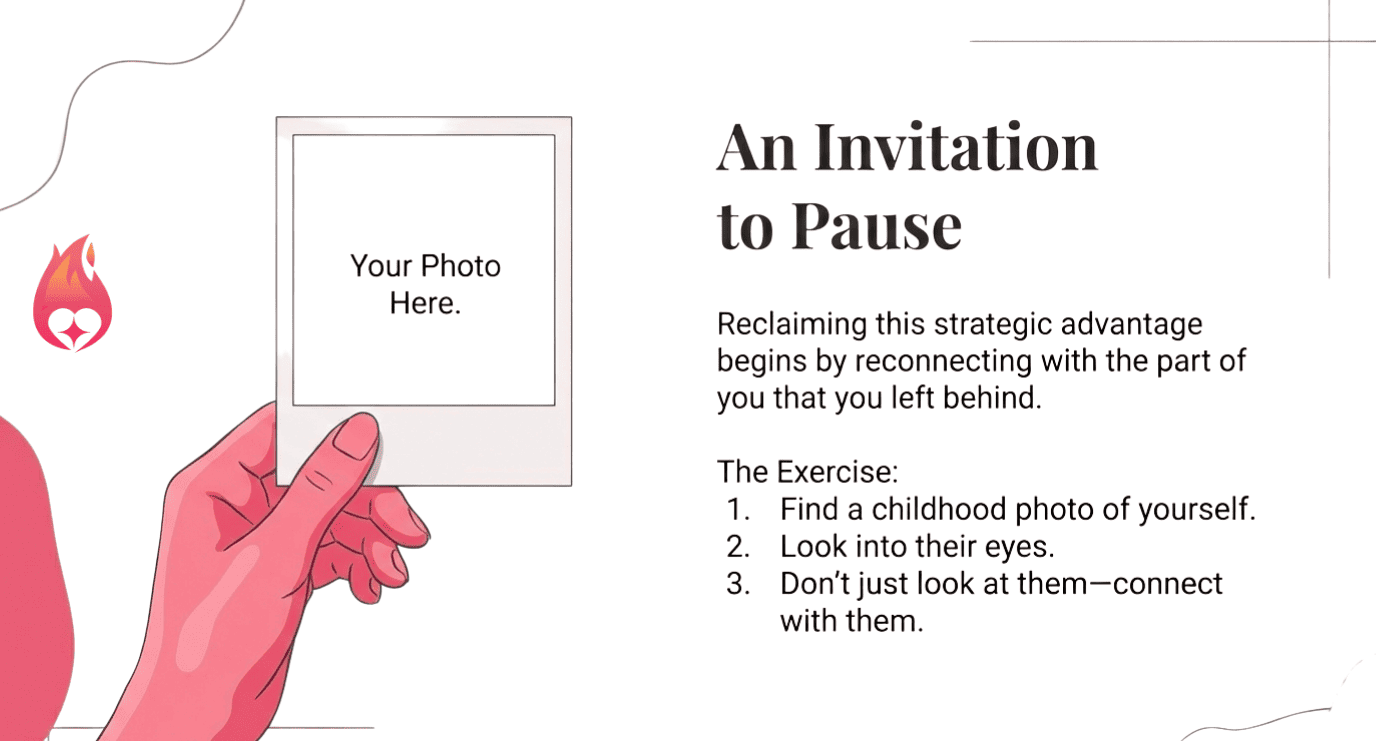
An invitation to pause
Find a childhood photo of yourself.
Look into their eyes.
Then, quietly:
Three things to say to them
- Tell them you love them exactly as they are — no matter what.
- Give them permission to be perfectly imperfect, curious, and courageous.
- Commit to being the person who advocates for them, protects their voice, and stands firmly on their side.
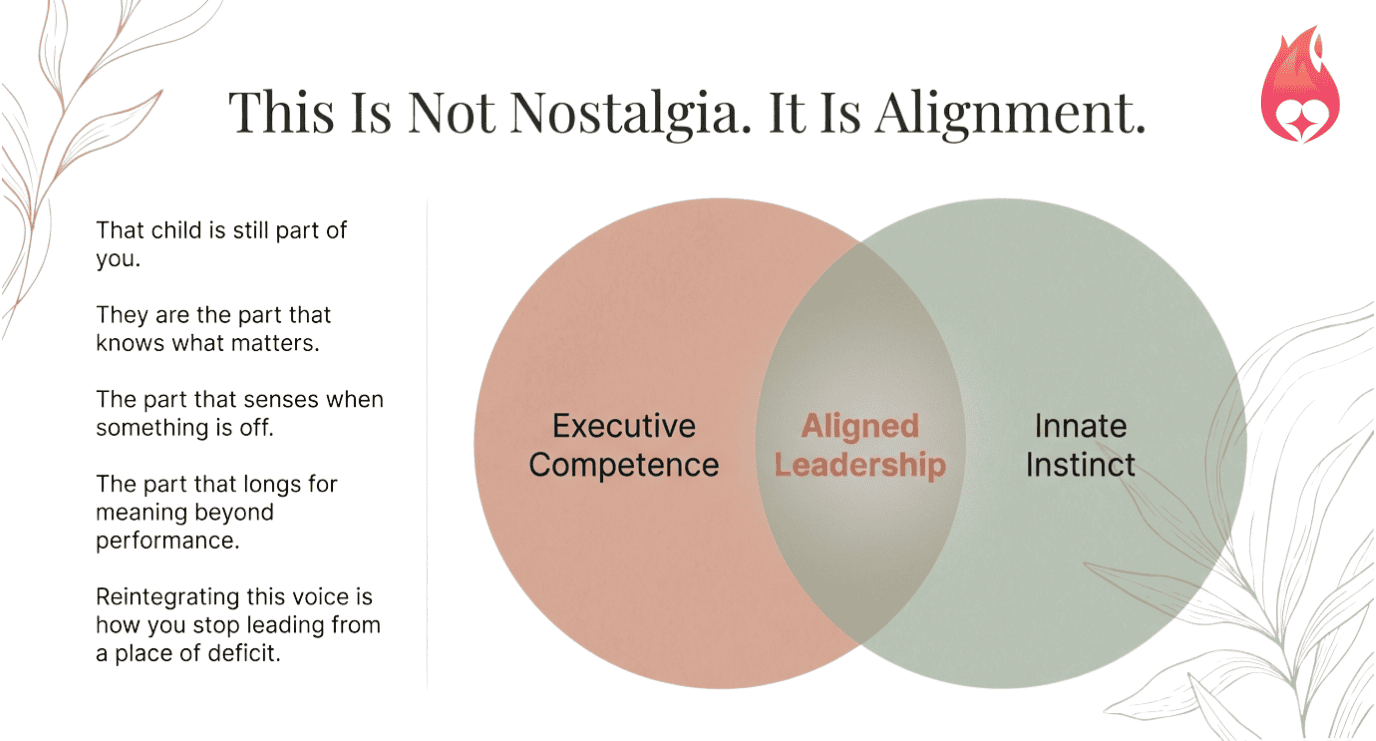
This is not nostalgia.
It is leadership alignment.
Because that child is still part of you — the part that knows what matters, that senses when something is off, that longs for meaning beyond performance.
Leading from acceptance, not self-pressure
Many executives I work with are not blocked by a lack of skill or intelligence. They are blocked by a relentless inner narrative that says:
But leadership does not deepen through self-attack.
It deepens through self-acceptance.
You are still that person.
You are worthy.
You are enough.
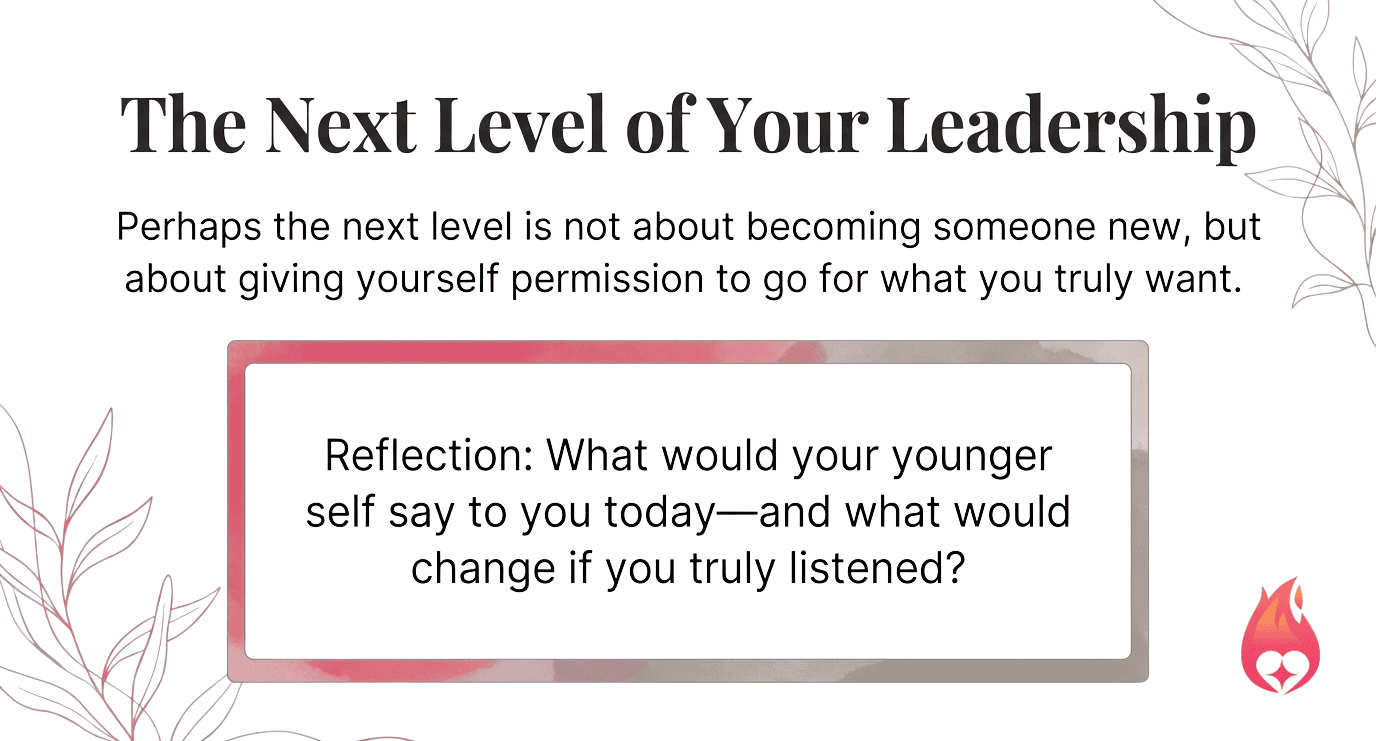
And perhaps the next level of your leadership is not about becoming someone new — but about giving yourself permission to go for what you truly want.
What would your younger self say to you today —
and what would change if you truly listened?