

Harnessing Momentum Tunnels for a Powerful Morning Routine
“Whether you practice them consciously or not, your life is filled with regular habits and rituals that hold you where you are. Consciously creating new ones is a vital part of taking authorship of your life. It’s where you start to put theory into action.”
— Melissa Dawn, Why Can’t I Just Be Me
Imagine stepping into each day with clarity, confidence, and a deep sense of purpose—fully present and leading with intention.
What would that look like to you? What would it create for you in life and leadership?
How you start your morning shapes how you lead, how you connect, and how you navigate challenges. It sets the tone for your energy, decision-making, and emotional resilience.
In fact, many executives and high-level leaders attribute their success to structured, mindful morning routines. They know that how they begin the day impacts their ability to respond, rather than react, and empowers them to approach whatever the day brings with intention and purpose.
A well-crafted morning routine is one of the most powerful tools you have—not just for personal fulfillment, but for leading with heart and strategy, in even the most challenging times.
In this article, we’ll explore:
✔️ The leadership impact of daily routines
✔️ Why is a morning routine important for leadership presence?
✔️ How your habits influence your team and organizational culture
✔️ The power of momentum tunnels—and how to harness them
✔️ How to create a morning routine that stick (5 steps)
✔️ Strategies for sustaining long-term success
The Leadership Impact of Daily Routines
The small things we do every day—our habits, rhythms, and routines—create the foundation for our leadership or executive presence.
Studies show that intentional routines:
✨ Reduce stress and decision fatigue
✨ Increase focus and productivity
✨ Enhance emotional intelligence and resilience
Conversely, unstructured or reactive habits can contribute to burnout, distraction, and decision fatigue.
When we consciously design our routines, we create momentum that fuels both our leadership and well-being.
That’s why it’s essential to:
🌿 Practice routines with intention—aligning them with the kind of leader you want to be.
🌿 Reassess them when you want to grow—because leadership is an ongoing journey.

Why is a Morning Routine Important for Leadership Presence?
How you begin your day influences how you show up for others.
🌤️ A rushed, chaotic morning? Likely leads to scattered focus and reactive decision-making.
🌿 A mindful, intentional morning? Sets the foundation for confidence, clarity, and presence.
Think of it like planting seeds. The habits you cultivate in the morning determine the type of leadership energy you bring into the day, which influences what grows within and for your team.
Take a moment to reflect:
🔍 How does my current morning routine shape my leadership presence?
🔍 Am I setting a tone of clarity, focus, and responsiveness?
🔍 What small shift could help me show up more intentionally?
A great morning routine isn’t just about productivity—it’s about leading yourself first, so you can lead others more effectively.
How Your Morning Routine Shapes Your Team
Leadership is not just about what you say; it’s about the energy you bring into every interaction. This is a critical part of the type of influence you have as a leader.
🌊 When you start your day calm, focused, and centered, your team feels that.
🌊 When you start rushed, reactive, and overwhelmed, that energy carries through as well.
Just as a strong leader creates stability in times of change, a strong morning routine creates internal stability, allowing you to lead with confidence and heart.

Momentum Tunnels: The Key to Lasting Change
Every habit—whether intentional or not—creates a momentum tunnel, a pattern that gains traction over time.
If your current habits generate stress, distraction, or exhaustion, you are reinforcing negative momentum. The good news? You can shift momentum in a new direction.
How to Create Positive Momentum
✨ Pause negative momentum – Identify habits that drain your leadership energy.
✨ Build new momentum – Establish rituals that align with your leadership vision.
✨ Close the exits to old habits – Remove easy temptations that pull you back into old routines.
Example: Replacing a Habit That Drains Energy
Let’s say your first action each morning is checking your phone. This might:
⚠️ Pull you into reactive mode instead of setting your own priorities.
💭 Flood your mind with outside demands before you’ve had time to ground yourself.
🌊 Trigger stress and decision fatigue before the day even begins.
By replacing this with five minutes of mindful breathing or strategic reflection, you begin shifting momentum in a positive direction.
So… What does a good morning schedule look like? It’s one that is aligned with your inner leader to create tunnels of positive momentum for yourself, and your entire team.
How to Close the Exits to Old Habits
Change doesn’t stick when easy exits are left open. Here’s what closing an exit could look like:
🚪 Habit to Shift: Checking emails first thing.
🔑 How to Close the Exit:
- Charge your phone outside the bedroom.
- Use a physical alarm clock instead of your phone.
- Set a “no emails before 8 AM” boundary for yourself.
⏳ Habit to Shift: Hitting snooze repeatedly.
🌞 How to Close the Exit:
- Place your alarm clock across the room.
- Use an app like Alarmy, which requires scanning a preset object (e.g., your bathroom mirror) before turning off.
Small, intentional shifts like these close off exits, reinforce new momentum, and increase your probability (and speed) of success.
Ask Yourself:
- What momentum tunnels are currently reinforced by your morning routine?
- Is this momentum working FOR you or AGAINST you?
Understanding the power and pull of momentum tunnels provides key insight into how to build a morning routine that actually sticks.

How to Create a Morning Routine That Sticks (5 Steps)
Step 1: Get Clear on Your Leadership Vision
Before changing your routine, define what success looks like for you.
📖 What values do I want to lead with each day?
📖 How do I want to feel in the morning?
📖 Does my current routine set me up for that vision?
📖 Does my routine align with my purpose?
Note that not everyone resonates with the idea of a singular life purpose. If that’s you, consider a concept like Ikigai, which infuses daily actions with a sense of purpose.
Step 2: Start Small—One Shift at a Time
🌱 Focus on just one key change at a time.
🔹 Pause a habit that no longer serves you.
🔹 Introduce a habit that fuels your leadership.
Choose something that feels motivating and easy enough to integrate. Think of it like building momentum on a bicycle. You don’t start by trying to pedal uphill. Start on level ground and build from there.
Step 3: Design a Routine That Fuels You
A well-rounded morning routine supports:
🧠 Mind – Reflection, journaling, strategic planning.
💪 Body – Movement, hydration, nourishing breakfast, sunlight.
❤️ Spirit – Mindfulness, gratitude, meaningful connection.
In designing your morning routine, consider your WHOLE LIFE fulfillment. What areas do you need to work on? What areas can you build from? To get a full picture, download our whole life assessment wheel.
Step 4: Build Momentum Gradually
🔹 Layer in new habits over time—small wins create lasting success.
🔹 Adjust as needed—your routine should evolve with you.
🔹 Expect a dip—motivation fluctuates, but consistency sustains progress.
Step 5: Implement & Reassess
🔹Commit to your new routine for a set time (e.g., 30 days).
🔹Reflect: What’s working? What needs adjusting?
🔹Optimize: Make small shifts to keep momentum going.
Intentional reassessment is part of an intentional routine. When you do so, you’re not just optimizing your day, you’re leading yourself with intention, which will propel you to new heights in your work and life.
Final Thoughts: Leading with Intention
Your morning routine isn’t just about habit-building—it’s about setting the foundation for how you lead.
✨ When you lead yourself with clarity and heart, you lead others more powerfully.
✨ When you begin your day with intention, you elevate not just your own experience, but the experience of everyone around you.
If you are ready to cultivate routines that fuel your leadership—and want expert guidance from Master Certified Coaches who specializes in heart-centered executive leadership—we would love to support you.
Let’s start the conversation. 🌿








 In my many years of coaching, I have worked with a diverse mix of professionals – from entrepreneurs and small business owners, all the way up to Fortune 100 leaders, and across a variety of industries. What I’ve learned is that so many people are ready for change, BUT so many people are also caught up in the idea that concepts like servant leadership just can’t be effective.

 As leaders, our role is to create a safe space for people to come and talk to us. They have to have trust that they will be heard and validated; that what they have to say will be met with openness, not judgement.

 The real magic happens when we, as leaders, embrace the opportunities for our own growth alongside the growth of those we lead. This is part of why questions are a powerful tool for leaders. Being a safe space for others is no easy feat. It demands kindness towards yourself first and foremost. It demands caring for your whole self and establishing healthy habits that keep you grounded and connected.

 Gremlins aren’t evil. They’re protective. They originate in childhood, often to keep us safe from things we don’t yet understand. When something feels scary, confusing, uncertain, uncomfortable or embarrassing, our Gremlin springs into action to protect us. Some people even think of their Gremlin as their inner Warrior because of this role.
 When I first started to notice my Gremlins, I was afraid and would visualize sending them into burning lava. I didn’t like how they had been holding me back and I just wanted them gone.
 Am I really asking you to visualize bad things? Yes, but not to dwell on them. Just to explore them so that you can take their power away.
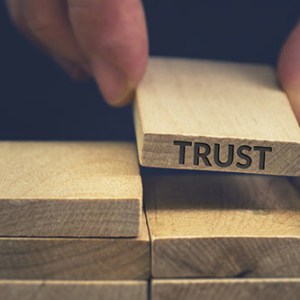 These concerns are also rooted in that old, command-and-control style of management. We know now that this style only stifles creativity and causes people to feel like they need to keep up their “work self” personas.
 doing it themselves.
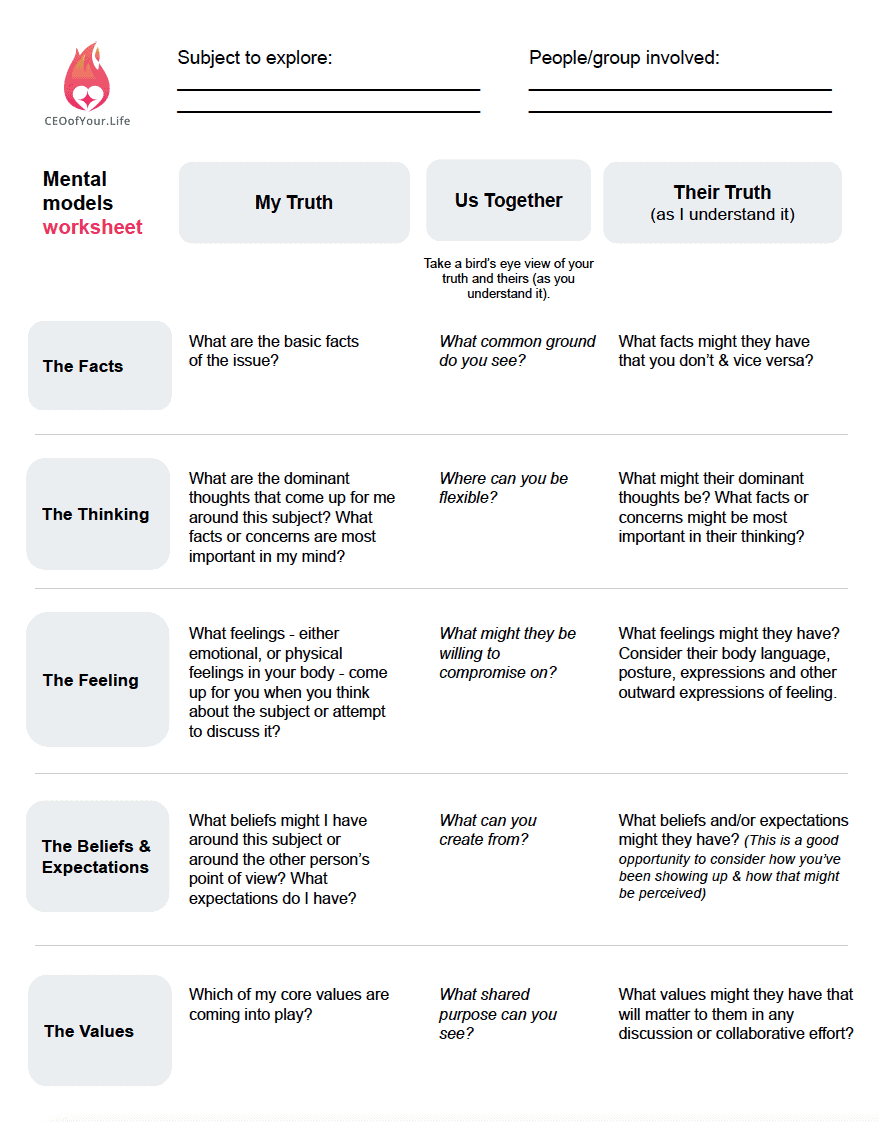
 However, understanding your mental models can also be a powerful tool in non-conflict times. The mental models worksheet I shared in the linked post above gives you space to explore your own perspective and that of the other side, but when there is no “other side” in question, you can simply use the first part of the sheet to build insight into your own inner experience.





 This misses the beauty of diversity, which is to create something even better – for your organization, your people, your community and the world.
 It is primarily intangible actions – behaviours and practices baked into the culture – that tell people whether or not they are genuinely valued.
 What someone brings to their role is important – their skills, experience and practical knowledge. However, if you want people to be engaged, creative and productive, they need to bring the full force of their strengths and energy into the work that they do. As a leader, you need to be the one driving this by living it yourself and valuing it in others. Get curious about what fires people up, what they enjoy in their downtime, what other interests they have, their personal goals and passions.For example, maybe someone is really into health and fitness in their personal time, but they never talk about it at work. If you get curious about it and ask them about it, maybe other people overhear or they start mentioning their interests from time to time. Maybe that turns into a group of people becoming running buddies, either in person or through an app. Now you have employees connected to each other in a stronger way. By finding that point of connection, they develop better relationships that translate to more creative collaboration. Whether it’s cooking, travelling, reading, meditation, online gaming, writing fan fiction, creating makeup tutorials, celebrating holidays, following cricket… celebrate people bringing their joys and interests forward to create an inclusive, integrated work culture.
 Connect with your higher self, the Universe, your purpose before going into the conversation. Connect with your
  Committing to the level of authenticity brings
 Never leave a conversation without feeling it has moved forward in some way. If there is a time constraint, set a firm date and time for when you’ll pick the conversation up again.



