


How to Set Healthy Boundaries in Difficult (and all) Times
Boundaries are always important. Especially now. With many people now working from home, many clients have told me they need their own space. I’ve seen everything from meetings in closets, to spaces within spaces, to reimagined furniture. These physical and visual boundaries are great, AND can be helped along by healthy personal boundaries.
What are Healthy Boundaries?
“Boundaries are the distance at which I can love you and me simultaneously.”
~Prentis Hemphill

When you feel safe and free within a space, that’s when you know you have healthy personal boundaries. This is true in a physical space, but what I’m talking about here are emotional, mental and spiritual spaces.
Whenever we feel that our personal “space” – our inner wellbeing – is threatened, crowded, jumbled up, or otherwise not secure, that’s an indicator that we don’t have healthy boundaries in place. This can feel like you’re doing everything to please others, or just to “stay afloat”, like your life force is being sucked out, or like you’re just functioning in survival mode.
The pandemic has shifted so many of our “walls” – our physical spaces, interactions with others, the role of media in our lives, even how we prepare to leave the house – meaning we have to tap into our flexibility to reimagine what healthy boundaries look like for us, then put them into practice.
Boundaries & Fear
Many people are afraid to set boundaries that empower self-love. We’re afraid of rejection or upsetting someone. Afraid of love or affection being withdrawn. Afraid of getting fired. Afraid of being criticized, called selfish or accused of being a bad parent, spouse, friend or child. We fear the loss of whatever carrot is dangled in front of us.
It took me a long time to realize this.
Let me tell you, when you live your life afraid to set boundaries, people just seep right in there with all their ideas, opinions and demands… and it is quite hard to change.
So, if that is where you are starting from, you are not alone. If you’ve set boundaries before, but find they aren’t serving you in your new normal, you aren’t alone in that either.
Get Comfortable with the Uncomfortable
If you truly want to end the draining, people pleasing cycle, you need boundaries. You have to put walls up against situations and people that cause you to feel less than whole.
In some cases, those walls will build stronger, more vibrant relationships with deeper connection through understanding. In other cases, those walls will be protective, keeping toxic people or situations at bay.
And let’s be clear: Protecting yourself is not selfish! It’s a vital form of self-care.
My Journey
As a child, I was stopped and reprimanded whenever I tried to explore or question, so that I essentially had no voice.
Because I was not allowed to explore, not taught to say NO when I was uncomfortable, always expected to respect adults unconditionally, I never developed self-confidence.
Instead, I grew up believing that my thoughts and feelings were wrong, and that it was up to authority figures to tell me what to think, feel and do.
Not having this confidence created many issues in my life.
 My experience was at the extreme (though sadly not uncommon) end of what can happen when a child is denied the right to set boundaries. I didn’t know to speak up when something wasn’t right and the wrong people took advantage of that. I later learned that people who mistreated me went on to do this to others as well, never facing the consequences for what they had done.
There are many ways we can end up abused or taken advantage of when we are not empowered to set our own boundaries – when we are taught that pleasing others matters more than respecting ourselves.
Learning to set boundaries as an adult, I learned that healthy boundaries aren’t just about protecting ourselves from the bad, but also about creating the good things we want. As they guide us away from what isn’t right for us, they guide us towards the relationships, opportunities and pursuits that fuel us from the inside, creating a domino effect within our lives and those of the people around us.
How to Set and Maintain Healthy Boundaries
Like I said, setting boundaries is easier said than done. Especially if the people around you are resistant and/or dealing with their own struggles. Remember to put your own oxygen mask on first. If you’re holding others up without caring for yourself, you aren’t being strong. You’re being used. Eventually, you’ll get used up and that’s when burnout sets in.
Here are 12 tips and best practices to strengthen yourself within through holding up your boundaries:
1. Identify where you need to set or adapt boundaries.
If boundaries are the distance at which you can love yourself and the other person simultaneously, where is this missing for you? For this exercise, let’s use the word “love” not in a romantic sense, but a human one – that point at which you can fully love and accept the humanness of yourself, and fully acknowledge and respect the humanness of the other person.
2. Accept the reality of the situation.
You may think, “If I just change this or that, if I just do a little more, if I just do this one thing…” Or you might think, “If they just change this or that …”
In a healthy relationship – personal or professional – no one should have to compromise their values, overextend themselves, put up a false front, or employ any other inauthentic tactic to make things work. That isn’t love, acceptance, or respect. Accept what is and what isn’t.
3. Let go of what they can’t give you.
You could spend your whole life trying to get approval and acceptance from others and never get it. Trust me, I did this a lot. I depleted myself again and again to keep the peace or to gain love. It only ever ended in me burning out.
Whatever you fear losing – that person or their love – face it. Burn those limiting feelings if you have to. Just let it go.
4. Prepare for resistance.
Change can be difficult. The person you’re setting boundaries with may resist the change at first. Prepare yourself to handle this with compassion, but also with confidence and consistency in holding the boundaries you need.
With toxic people, they will likely react negatively. Your boundaries prevent them from continuing on as they want to. That is not your wound to heal.
Remember our definition of boundaries. No part of that says that the other person has to love you. That’s not something you can control. Find the place where you can love yourself and see the humanity of the other person, then stand firm in that place. Where they choose to stand is outside your circle of control and responsibility.
5. Remind yourself of why you’re doing this.
When someone reacts poorly to our boundaries, we’re often tempted to revert back to pre-boundary terms. This is normal. Remind yourself why you started this journey, and that you cannot change others, only yourself. Talk it through with your support person. You need to stick with your new boundaries and having people to support you is essential.
6. Stay alert to red flags.
The person you’re setting boundaries with might try to guilt trip you, call you selfish or inconsiderate, play themselves as victims, gaslight you… They know how to make you feel guilty and how to break down your confidence. They will play on that to try to maintain the status quo.
Be aware of these tactics, stay alert to them, and don’t engage with them.
7. Be conscious of levels of awareness.
When you choose to be intentional about setting healthy boundaries, you’re choosing to act from your highest level of awareness. The person you’re setting boundaries with may be operating from a lower level. In showing up at a higher level, they may be inspired to bring themselves up as well. Or not. It isn’t your responsibility (or within your power) to bring them up. Be open to them rising, but stay firm in not getting pulled down.
8. Always remember that if you want something different, you need to do something different.
Whether setting boundaries is new for you, or you’re adapting boundaries to work in your new reality, changing the way you show up is how you create change in your life. Healthy, intentional, conscious boundaries are one of the most important parts of putting self-acceptance into action; of truly becoming the CEO of your life.
9. If you are a parent, healthy boundaries matter x2.
Setting healthy boundaries with others sets a solid example for your children. Setting healthy boundaries with your children teaches them that boundaries are part of love, not a limit to love. This means also respecting your child’s boundaries. As parents, we can do this by aiming to be their guide, not their dictator. Let them explore, discover and build a solid sense of self. Let them say no. Let them make choices. Show them that boundaries are meant to be respected in a loving relationship by respecting theirs. Of course we can’t let them play in traffic, never take a bath, or forego school, but there are so many boundaries we can respect.
10. Start small.
Some people are so eager for change that they start setting all their boundaries at once and the situation gets crazy. From my experience, both personally and in working with coachees, I recommend setting (or adapting) 1-2 boundaries at a time, before gradually adding more. Give the other person time to swallow and adjust, and yourself the time and clarity to be really intentional in holding your boundaries respectfully.
Yes, it can suck not to do it all at once, and that is the cost of not having set them sooner. Moving forward, remember that this is why it’s so important to have authentic conversations when situations arise. Doing so naturally builds healthy boundaries into the relationship so that there isn’t a jarring or burnout situation down the road.
11. Be mindful of your words.
The way you say it is really important in establishing boundaries. If you are lashing out, for sure that will get a negative reaction. Speak from a heart of peace, not a heart of war (taken from the book, The Anatomy of Peace).
Choose to see the humanity on the other side – a person with needs, wants, fears, desires and struggles just like you. Get curious about what is going on with them. Even if you are “at war”, you can show up with compassion. When you do so, others are more likely to treat you the same way, increasing the likelihood of peace.
12. Know the difference between compassion and capitulation.
Having compassion for someone else’s discomfort is not the same as giving in. Here’s an example of the difference when someone resists your boundaries:
Capitulation: “I’m so sorry. I didn’t mean to upset you. Maybe we can find a compromise.”
Compassion: “This is hard. I can see you’re upset and I get it. Change can be difficult. This boundary is important for me and I need to stand firm.”
See the difference? Healthy boundaries – the ones we need in order to love ourselves fully – cannot be up for negotiation. Your happiness can’t depend on anyone else’s choices, just as someone else’s happiness can’t depend on yours. Compassion is acknowledging and accepting another person’s discomfort, not taking responsibility for it.
 Let’s face it. If setting healthy boundaries were easy, we wouldn’t be facing the burnout epidemic that was rising long before we’d ever heard of Covid. It’s hard, and many of us simply weren’t raised to have confidence in our own inner experience. This isn’t necessarily a failing of previous generations, but an evolution in our understanding of what children need to become healthy adults.
As Maya Angelou said, “Do the best you can until you know better. Then when you know better::, do better.”
Be the person today that your child-self needed. Be that person for yourself and for those around you. This is how we create better lives for ourselves that ripple out into a better world. With the pandemic, we have the choice not to “go back to normal” but instead to create an even better normal. So now that we know better for ourselves, let’s do better for ourselves.
If you need help getting clear on your boundaries and putting them in place – either personally or professionally – please connect with me. Let’s make this happen.
Additional resource: 10 Tips for Setting Healthy Boundaries

 Connect with your higher self, the Universe, your purpose before going into the conversation. Connect with your
  Committing to the level of authenticity brings
 Never leave a conversation without feeling it has moved forward in some way. If there is a time constraint, set a firm date and time for when you’ll pick the conversation up again.
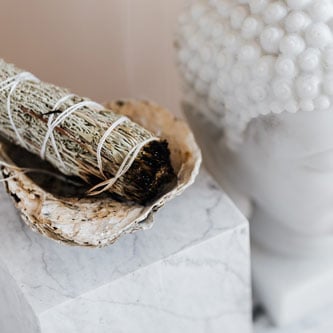 There are many reasons to smudge. Some people even do it during or after an illness. Much like opening a window to refresh the air, smudging opens an energetic window to refresh the energy. Depending on the organic materials you use, there can be many additional benefits beyond energy.
  Smudging is a great way to clear out the negative and invite in the positive, but it only works if we are clear in our intentions and what we want to create. If that’s something you struggle with and would like help refreshing your energy or the energy of your leaders, team or organization, I invite you to
 So many of us focus on what we can think through, logically, inside that grey matter, and push away the wealth of information our bodies are trying to give us. For a lot of people, we’ve been conditioned throughout our lives to hone in on our logic, pushing everything else aside.
 1 – Start from you.
 There’s no question this is an uncertain time. The way we show up now will have an impact way beyond this crisis.



 “CTI” stands for
 This brain is just above our reptilian brain and is responsible for what, in evolutionary biology, is often referred to as “The 4 F’s”: fear (or sometimes fleeing), fighting, feeding and fornication… though some biologists will use an alternative F word for that last one ;) These are known as our primal drives. Interestingly, the mammalian brain is also where our emotions are held. Think about it. These primal drives are all about survival, so they need to be directly connected to feelings of anger, fear, joy and comfort. They need to worry about scarcity, hold onto grudges, and create intense feelings of avoidance related to negative experiences. It also needs to remember where we felt safe and well fed so we can retreat back. The mammalian brain doesn’t have time for logic. It leaps from trigger to panic mode to keep you alive.
 Instead of asking yourself, “How do I fix this?” try asking, “How can I create from this?”
 As I’m writing this, we’re in the midst of the COVID-19 pandemic. Many of us are working from home and feeling the effects of anxiety, isolation, drastic change and even grief.




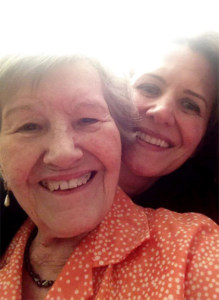
 So there we were, all of us sitting in a circle. I had a picture of my grandmother out and lit some candles. I shared stories about her and how she inspired me. She used to tell me how, during the Hungarian Revolution, she was working in a hospital. When bombs would drop, everyone who could duck would until the bombs passed. She would duck and pray hard. When she would get up, so many people around her would be dead and she would feel so grateful to be alive. Her unending positivity was so impressive. She has always been a role model of strength, love, joy and lightness. Of being her truest self, bravely and unapologetically. Of turning towards gratitude no matter what. I asked everyone to send her prayers to hold on until I made it back so that I could say my final goodbyes.
 The meditation was being led by a shaman I truly love and respect, and was being held a good distance away. To get there, I had to drive on icy roads, drop off my son, pick up a friend, and even walk the dog to ensure she would stay calm during the meditation.
 Trust the process. When you use self-acceptance and self-authority, you live your life with an open heart, knowing you are enough and honouring yourself in all your perfect imperfection. When you lead from this place, you know you are leading from your best self; your high vibration self. Whatever follows will be for your highest good.
 When that negativity came in, I could have swept those feelings under the rug, but that would have brought me down to that lower vibration where external circumstances can so easily run our lives. By choosing to tap into my highest self and be guided by my inner leader, I learned a powerful truth about myself and began a new healing journey. I also strengthened my relationship with my shaman and with myself. Like a domino effect, trusting the process and accepting my whole self has led to even stronger trust and greater self-acceptance.



